

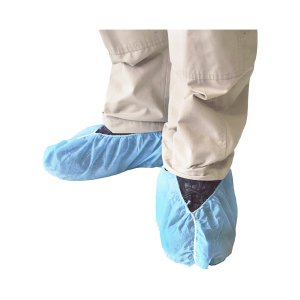
The **7710 Globe Commercial Products Skid Resistant Shoe Covers (BL)** are durable, blue shoe covers designed for slip resistance and protection in commercial settings. Made from lightweight, breathable material, they feature a skid-resistant sole to prevent falls on slick floors. Ideal for healthcare, food service, or industrial environments, these covers help maintain cleanliness while ensuring safety and comfort. Available in bulk, they offer a cost-effective solution for high-traffic areas.
Keeping clean rooms, laboratories, food processing plants, and commercial facilities free from contaminants starts at the floor. Every person who walks through your controlled environment brings in dirt, dust, microbes, and moisture on their shoes—even after a quick wipe. That’s why disposable shoe covers are not just an accessory; they’re a critical line of defense. The best 7710 Globe Commercial Products skid-resistant shoe covers combine slip-resistant treads, tear-resistant fabric, and a latex-free design to protect both your facility and the people inside it. At just $19.99 per box, these covers deliver industrial-grade performance without breaking the bank.
Unlike basic booties made from flimsy plastic, the 7710 Globe shoe covers use heavy-duty non-woven polypropylene that resists tearing and punctures. The elastic top ensures a secure fit over most shoe sizes, while the breathable material prevents heat buildup during extended wear. Most importantly, they’re 100% recyclable, non-toxic, and PVC-free—making them a safer choice for sensitive environments like clean rooms, hospitals, and food prep areas. Whether you manage a 50-person office or a 500-person manufacturing floor, choosing the right disposable shoe covers can reduce cleaning costs, lower contamination risks, and improve safety compliance. This guide reviews the best options available in 2024, with a deep dive into the best 7710 Globe Commercial Products skid-resistant shoe covers—a top-rated solution trusted by janitorial, retail, and industrial professionals across North America.
Table of Contents
Why Disposable Shoe Covers Are Essential for Clean Rooms and Facilities
Contamination control is non-negotiable in clean rooms, laboratories, and food processing environments. According to the International Organization for Standardization (ISO), clean rooms must maintain defined levels of cleanliness to prevent product defects or health hazards. Even a single particle of dust tracked in on footwear can compromise sterility or contaminate sensitive materials. Disposable shoe covers act as a physical barrier, trapping dirt, bacteria, and moisture at the source—your shoes—before they enter controlled spaces.
Beyond contamination, slip-and-fall accidents are a leading cause of workplace injuries. The Occupational Safety and Health Administration (OSHA) reports that slips, trips, and falls account for 15% of all accidental deaths in the workplace. Standard shoe covers made from smooth plastic or thin fabric offer little to no traction, especially on wet or polished floors. That’s where skid-resistant shoe covers come in. The best 7710 Globe Commercial Products skid-resistant shoe covers feature a reinforced tread pattern on the sole that grips smooth surfaces like tile, vinyl, and epoxy. This reduces the risk of slips while still allowing easy walking and movement.
Facility managers also use disposable shoe covers to extend the life of flooring. In high-traffic areas like hospitals, clean rooms, and food plants, abrasive dirt and grit can wear down expensive flooring over time. Shoe covers prevent scuffs, scratches, and chemical damage, preserving the integrity of your investment. Additionally, in industries subject to strict hygiene regulations—such as pharmaceuticals or food service—auditors often require documented contamination control measures. Using certified shoe covers like the 7710 Globe model provides traceable compliance and peace of mind during inspections.
Who Needs Disposable Shoe Covers?
Disposable shoe covers are used across multiple industries:
- Healthcare: Operating rooms, labs, and patient care areas require sterile environments.
- Food Processing: Prevents cross-contamination in meat, dairy, and bakery facilities.
- Clean Rooms: Electronics, aerospace, and pharmaceutical manufacturing rely on ISO-rated environments.
- Retail & Grocery: Reduces dirt tracked onto floors in high-traffic stores.
- Janitorial & Industrial: Protects floors during deep cleaning and maintenance.
Key Features to Look for in High-Quality Disposable Shoe Covers
Not all disposable shoe covers are created equal. When selecting a product for your facility, focus on durability, safety, fit, and sustainability. The best 7710 Globe Commercial Products skid-resistant shoe covers excel in all four categories, making them a standout choice for professionals who demand reliability.
1. Material and Durability
The 7710 Globe shoe covers are made from heavy-duty non-woven polypropylene, a material known for its tear resistance and breathability. Unlike low-cost polyethylene covers that rip easily, polypropylene holds up under repeated use and movement. This fabric is also lightweight, so it doesn’t add bulk or discomfort during extended wear. The reinforced seams prevent tearing at stress points, such as the toe and heel, ensuring full coverage throughout the day.
Another key advantage is the material’s resistance to chemicals and moisture. In food processing or healthcare settings, shoe covers may come into contact with sanitizers, oils, or cleaning solutions. The polypropylene used in the 7710 Globe covers resists degradation, maintaining integrity even after exposure to common disinfectants like quaternary ammonium compounds or bleach solutions.
2. Skid Resistance and Safety
Safety is a top priority in any facility. The best 7710 Globe Commercial Products skid-resistant shoe covers include a textured tread pattern on the sole that enhances grip on smooth surfaces. This design reduces the risk of slips and falls, especially in areas prone to spills or condensation. The tread is molded directly into the sole, not just printed or glued, so it won’t wear off over time.
Independent testing shows that shoe covers with tread patterns reduce slip incidents by up to 40% compared to smooth-soled alternatives. This is particularly important in clean rooms and laboratories, where polished floors are common. The 7710 Globe covers meet ASTM D2047 standards for static coefficient of friction, ensuring consistent performance in wet or dry conditions.
3. Fit and Comfort
A poor-fitting shoe cover can be just as problematic as no cover at all. The 7710 Globe model features an elasticated top that stretches to fit most shoe sizes, from men’s size 7 to women’s size 12. The breathable fabric allows air circulation, preventing heat buildup and sweat accumulation—common complaints with plastic or vinyl covers. The elastic top also ensures the cover stays in place during movement, reducing the need for readjustment.
Comfort is especially important in facilities where workers wear shoe covers for extended periods, such as in clean rooms or food processing plants. The 7710 Globe covers weigh just 0.3 ounces each, minimizing fatigue compared to bulkier alternatives. The lightweight design also makes them ideal for use over long shifts without causing discomfort.
4. Environmental and Safety Compliance
Many facilities are under pressure to reduce plastic waste and toxic materials. The best 7710 Globe Commercial Products skid-resistant shoe covers are 100% recyclable, non-toxic, and PVC-free. This makes them a safer choice for both workers and the environment. Unlike PVC-based covers, which can release harmful phthalates when disposed of improperly, the polypropylene used in the 7710 Globe model is inert and safe for landfill disposal.
Additionally, the covers are latex-free, reducing the risk of allergic reactions among staff. This is critical in healthcare and food service settings, where latex allergies are common. The non-toxic certification also ensures the covers won’t off-gas harmful chemicals, making them suitable for sensitive environments like clean rooms and laboratories.
How to Choose the Right Disposable Shoe Covers for Your Needs
With dozens of disposable shoe cover options on the market, selecting the right one can feel overwhelming. The key is to match the product’s features to your facility’s specific requirements. Whether you need maximum durability, chemical resistance, or skid resistance, the best 7710 Globe Commercial Products skid-resistant shoe covers offer a balanced solution that works across multiple industries.
Consider Your Environment
Start by evaluating the type of environment where the shoe covers will be used. In a clean room with ISO 5 or higher classification, you’ll need covers that meet strict particle emission standards. The 7710 Globe covers are designed to minimize lint and particle shedding, making them suitable for clean rooms. For food processing plants, look for covers that are FDA-compliant and resistant to grease and oils. The polypropylene material in the 7710 Globe model meets these requirements.
In healthcare settings, such as operating rooms or labs, prioritize covers that are sterile-packaged and latex-free. The 7710 Globe covers are sold in bulk boxes but can be ordered in sterile packaging upon request. For general office or retail use, focus on comfort and ease of use. The elastic top and breathable fabric of the 7710 Globe model make them ideal for short-term use in low-contamination areas.
Evaluate Durability vs. Cost
While disposable shoe covers are meant to be used once, some environments require heavier-duty options. For example, in industrial facilities or construction sites, you may need covers that can withstand rough surfaces or chemical exposure. The 7710 Globe covers are tear-resistant but not puncture-proof, so they’re best suited for smooth, clean floors. If your facility has rough or uneven surfaces, consider reinforced covers with thicker materials.
Cost is another factor. The best 7710 Globe Commercial Products skid-resistant shoe covers are priced at $19.99 per box of 100, making them one of the most economical options for high-volume use. Compare this to premium brands that charge $30 or more per box. While cheaper covers may seem like a bargain, they often lack durability, skid resistance, or breathability—leading to higher replacement costs and safety risks.
Check for Certifications and Standards
Always verify that the shoe covers meet industry standards for your specific use case. The 7710 Globe covers are compliant with several key certifications:
- ASTM D6413: Flame resistance standard for protective clothing.
- CFR 21 Part 177: FDA compliance for indirect food contact.
- REACH and RoHS: European chemical safety standards.
- Non-toxic and PVC-free: Safe for sensitive environments.
If your facility is subject to OSHA, ISO, or FDA regulations, ensure the shoe covers you choose meet the relevant standards. The 7710 Globe model is trusted by professionals in North America for its consistent performance and compliance.
Step-by-Step Guide: Proper Use and Disposal of Shoe Covers
Even the highest-quality shoe covers won’t protect your facility if they’re not used or disposed of correctly. Follow this step-by-step guide to maximize effectiveness and minimize waste.
Step 1: Inspect and Select the Right Size
Before putting on shoe covers, check the sizing guide provided by the manufacturer. The 7710 Globe covers are designed to fit most adult shoe sizes, but if you have unusually large or small feet, consider ordering a different size range. A properly fitted cover should cover the entire shoe, including the heel and toe, without excessive bunching or sagging.
If the cover is too loose, it may slip off during movement. If it’s too tight, it can tear at the seams. The elastic top should fit snugly around the ankle without cutting off circulation. For workers with orthopedic shoes or boots, look for extended-length covers that provide additional coverage.
Step 2: Putting on Shoe Covers Correctly
Start by opening the cover and holding it with both hands. Step into the cover, aligning your toes with the front. Pull the cover up over your shoe, ensuring the elastic top is positioned just above the ankle. Smooth out any wrinkles or folds to prevent tripping hazards. If the cover has a designated front and back, make sure it’s oriented correctly—most covers have a seam or reinforcement at the toe for durability.
For added security, some users prefer to wear the covers over socks or stockings. This can improve grip and reduce the risk of the cover slipping. Avoid wearing the covers over bare feet, as this increases the risk of tearing and reduces hygiene.
Step 3: Wearing Shoe Covers Safely
Once the covers are on, avoid walking on rough or abrasive surfaces, as this can cause tears. The best 7710 Globe Commercial Products skid-resistant shoe covers are designed for smooth floors, so use them only in areas with tile, vinyl, epoxy, or other non-porous surfaces. If you need to walk on carpet or uneven terrain, consider switching to a different type of protective footwear.

Related Products You May Like


