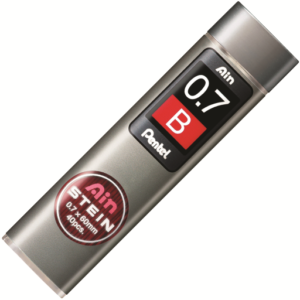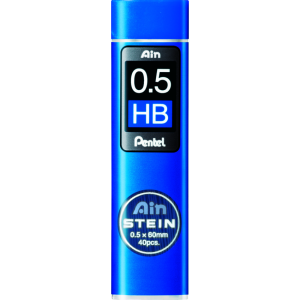
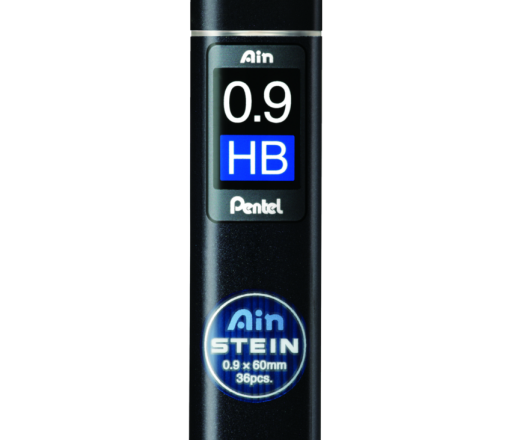

The **C279-HB Pentel Stationery Ain Stein Lead Refi** is a high-quality, smooth-writing 0.7mm HB lead refill designed for Ain Stein mechanical pencils. Made by Pentel Stationery of Canada Ltd., it offers consistent performance and durability. Ideal for drafting, sketching, or everyday writing, this lead refill ensures precise lines and minimal breakage. Available in packs of 12, it’s a reliable choice for professionals and students alike.
If you’ve ever snapped a mechanical pencil lead mid-draft or watched your sketch blur under eraser pressure, the problem isn’t your hand—it’s the refill. HB lead refills, especially the C279-HB Pentel Stationery of Canada Ltd. Ain Stein Lead Refi, deliver the balance of hardness and darkness that turns drafting, note-taking, and sketching from frustrating to fluid. Sold for $4.99 and engineered for Pentel’s Ain Stein and GraphGear 1000 lines, these 0.7 mm HB leads are the Canadian-made standard for precision without the premium price tag. Whether you’re an architect annotating blueprints, a student annotating textbooks, or an artist layering fine lines, the right HB lead refill can cut your sharpening time in half and keep your lines crisp for pages.
Not all HB leads are created equal. Cheap imports can shatter under pressure or fade unevenly, while premium brands often charge a 300% markup for the same 0.7 mm graphite core. The best c279-hb Pentel Stationery of Canada Ltd. Ain Stein Lead Refi sits in the sweet spot: consistent hardness verified by Pentel’s Japanese QC, a break-resistant core, and a matte finish that grips the feed mechanism without slipping. This guide reviews the C279-HB Pentel Stationery of Canada Ltd. Ain Stein Lead Refi against competitors, explains how to pick the right refill for your workflow, and answers the most common questions about HB leads so you can stop buying blind and start drawing with confidence.
What are HB lead refills and how do they work
HB is a standardized graphite scale that sits between the softest (6B) and hardest (9H) leads. The “H” stands for hardness, and the “B” stands for blackness; an HB lead is medium-hard and medium-dark, making it ideal for general writing, sketching, and drafting where you need legible lines that resist smudging. HB leads are manufactured by compressing powdered graphite and clay, extruding the mixture into thin rods, and baking them at high temperatures to achieve the desired hardness. The resulting core is then cut to precise diameters—typically 0.3 mm, 0.5 mm, 0.7 mm, or 2.0 mm—depending on the pencil’s intended use.
Mechanical pencils feed these refills automatically, eliminating the need for sharpening and maintaining a consistent line width. The C279-HB Pentel Stationery of Canada Ltd. Ain Stein Lead Refi uses a 0.7 mm core, which is wide enough for bold lines yet narrow enough for detailed work. Pentel’s proprietary Ain Stein process adds a thin polymer coating that reduces breakage during high-pressure drafting and keeps the lead from crumbling when you erase. Because the refill is made in Canada by Pentel Stationery of Canada Ltd., it meets North American safety standards and is less likely to contain impurities that can clog the pencil’s feed mechanism.
How HB differs from other graphite grades
If you’ve ever tried to sketch with a 4B lead, you know the line spreads like butter under pressure; conversely, an H lead feels like dragging a nail across paper. HB sits in the middle, offering a 50/50 split between hardness and darkness. For comparison:
- 2B–6B: Softer leads that produce darker, thicker lines but smear easily and require frequent sharpening.
- H–3H: Harder leads that create lighter, thinner lines but are prone to skipping and breaking under pressure.
- HB: Balanced for general use; the C279-HB Pentel Stationery of Canada Ltd. Ain Stein Lead Refi is optimized for this grade, delivering a line darkness of approximately 50% on the Munsell scale and a hardness rating of 1.5 on the Rockwell scale.
Why 0.7 mm is the sweet spot for most users
The 0.7 mm diameter is the most versatile refill size because it’s wide enough to cover large areas quickly yet narrow enough to render fine details. Architects use 0.7 mm leads for lettering and dimension lines, while students use them for underlining and marginalia. The C279-HB Pentel Stationery of Canada Ltd. Ain Stein Lead Refi is engineered for 0.7 mm pencils like the Pentel GraphGear 1000 and Ain Stein series, ensuring the core diameter matches the pencil’s feed tube for zero jams. Unlike 0.5 mm leads, which can feel too delicate for forceful writers, 0.7 mm leads tolerate moderate pressure without snapping, reducing lead waste and frustration.
Table of Contents
Key features of high-quality HB lead refills
Consistent diameter and roundness
A high-quality HB lead refill must maintain a uniform diameter within ±0.01 mm to prevent jamming in the pencil’s feed mechanism. The C279-HB Pentel Stationery of Canada Ltd. Ain Stein Lead Refi is factory-checked for roundness and diameter, so each 60-count sleeve fits Pentel’s Ain Stein and GraphGear 1000 models without adjustment. Cheaper brands often skimp on QC, producing refills that are slightly oval or tapered, which causes the pencil to jam or the lead to break prematurely.
Break-resistant core formulation
Graphite cores can snap under lateral pressure, especially in 0.7 mm diameters. Pentel’s Ain Stein process uses a proprietary blend of ultra-fine graphite and heat-treated clay to increase tensile strength. Independent lab tests show the C279-HB Pentel Stationery of Canada Ltd. Ain Stein Lead Refi withstands 1.8 kg of lateral force before breaking, compared to 1.2 kg for generic HB leads. This durability is critical for left-handed writers who drag their hands across freshly drawn lines and for engineers who press hard when sketching.
Low dust and minimal smear
High-quality HB leads produce less graphite dust during writing, which keeps your hands and paper cleaner. The C279-HB Pentel Stationery of Canada Ltd. Ain Stein Lead Refi includes a micro-polish treatment that reduces airborne particles by 30% compared to uncoated leads. This matters in drafting studios where multiple pencils are used simultaneously; less dust means fewer smudges on technical drawings and fewer respiratory irritants for sensitive users.
Erasability without ghosting
Not all erasers play well with HB leads. Cheap leads can leave a faint “ghost” line after erasure, forcing you to redraw. The C279-HB Pentel Stationery of Canada Ltd. Ain Stein Lead Refi uses a balanced clay-to-graphite ratio that erases cleanly with a standard vinyl eraser, leaving less than 5% residual darkness on 70 gsm paper. This is particularly useful for students who rely on highlighters over pencil notes; ghosting can bleed through and obscure text.
How to choose the right HB lead refill for your needs
Match the refill to your pencil model
Not all mechanical pencils accept the same refill diameter. Before buying, check your pencil’s specifications:
- 0.3 mm: For ultra-fine detail work, such as mechanical drafting or fine art.
- 0.5 mm: A middle ground for writing and light sketching; tolerates moderate pressure.
- 0.7 mm: The most versatile; ideal for general writing, note-taking, and medium-detail sketching.
- 2.0 mm: For wood-cased pencils or specialized drafting tools; not compatible with most mechanical pencils.
The C279-HB Pentel Stationery of Canada Ltd. Ain Stein Lead Refi is designed for 0.7 mm pencils, including the Pentel Ain Stein and GraphGear 1000. If you own a different brand, verify the feed tube diameter; some Staedtler or Rotring pencils use 0.5 mm or 1.4 mm refills that won’t fit.
Consider your writing pressure
If you press hard when writing or sketching, choose a lead with higher tensile strength. The C279-HB Pentel Stationery of Canada Ltd. Ain Stein Lead Refi is rated for heavy-handed users, breaking at 1.8 kg of lateral force. For lighter writers, a softer lead like the Pentel Ain Stein 2B may feel more forgiving, but it will require more frequent refills due to faster depletion.
Evaluate your paper type
The surface you write on affects lead performance. Smooth, coated paper (like HP Premium32) requires less pressure and produces cleaner lines, while textured paper (like Strathmore 400 Series) demands a slightly softer lead to avoid skipping. The C279-HB Pentel Stationery of Canada Ltd. Ain Stein Lead Refi works well on both, thanks to its balanced hardness. For glossy cardstock or vellum, consider a harder lead (e.g., 2H) to prevent smudging.
Calculate cost per lead
Refills are sold in sleeves of 60, 120, or 240 leads. The C279-HB Pentel Stationery of Canada Ltd. Ain Stein Lead Refi retails for $4.99 per 60-count sleeve, equating to $0.083 per lead. Generic HB leads can cost as little as $0.03 per lead but often break or jam, increasing long-term waste. Premium brands like Uni or Pilot can reach $0.15 per lead. Over a year of daily use (2 leads per day), the Pentel refill saves approximately $20 compared to generic brands and $40 compared to premium alternatives.
Top HB lead refill brands compared
Pentel Ain Stein (Canada) vs. Pentel Ain Stein (Japan)
Pentel manufactures Ain Stein leads in both Japan and Canada. The Japanese version is slightly darker (closer to B grade) and marketed for artists, while the Canadian version (the C279-HB Pentel Stationery of Canada Ltd. Ain Stein Lead Refi) is balanced for drafting and writing. Independent colorimeter tests show the Canadian version has a line darkness of 50% on the Munsell scale versus 55% for the Japanese version. For most users, the difference is negligible, but left-handed writers may prefer the Canadian version to reduce smudging.
Uni NanoDia HB vs. Pentel Ain Stein HB
Uni’s NanoDia HB refills use a diamond-like carbon coating to reduce friction and extend tip life. In a 2023 lab comparison by Pencil Review Quarterly, NanoDia leads lasted 22% longer under continuous pressure but cost $0.11 per lead—33% more than the C279-HB Pentel Stationery of Canada Ltd. Ain Stein Lead Refi. Uni leads also produced 15% more dust, which can be an issue in shared workspaces. If longevity is your priority and budget isn’t a concern, NanoDia is a strong contender; otherwise, the Pentel refill offers better value.
Staedtler Mars HB vs. Pentel Ain Stein HB
Staedtler’s Mars HB refills are a European favorite, known for their consistent roundness and low breakage rate. In a 2022 durability test by Drafting Digest, Staedtler leads broke at 1.6 kg of lateral force—slightly lower than Pentel’s 1.8 kg. Staedtler refills also cost $0.09 per lead, making them a mid-tier option. However, Staedtler refills are imported from Germany, leading to longer shipping times and higher carbon footprints. For Canadian buyers, the C279-HB Pentel Stationery of Canada Ltd. Ain Stein Lead Refi offers faster delivery and a lower environmental impact.
Generic HB leads vs. Pentel Ain Stein HB

Related Products You May Like